The passion for assembly, piece by piece
The term ⁇ dissectologist ⁇ has its roots in the English word dissectologist, used to describe those who, in the 19th century, adhered to the art of dissecting puzzles, literally and metaphorically. Unlike other forms of recreation that rely on immediate results, puzzles require a patient and methodical approach. Every piece found is a victory, one more step toward a complete vision. It is this process, not just the result, that attracts dissectologists.
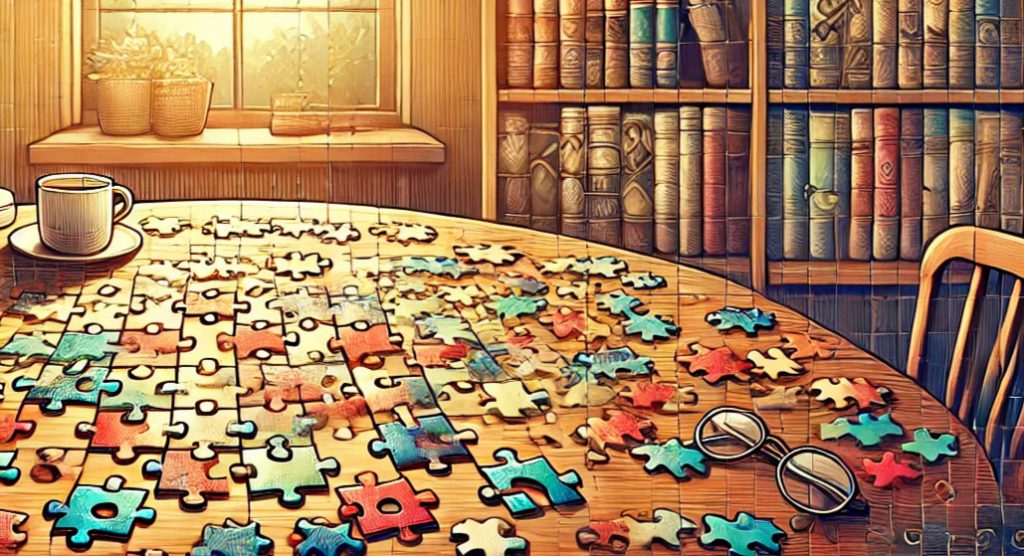
Imagine a puzzle of 1,000 pieces. You have an organized chaos ahead of you: colorful fragments, borders to spot, patterns to identify. The dissectologist, armed with a cup of coffee and a firm determination, dives into this sea of details with a clear objective. It’s not just an activity; it’s a mental challenge, a way of structuring chaos.
Why solving puzzles is more than just a hobby
Being a dissectologist is more than just loving puzzles. It involves a fascination with intellectual challenges and the ability to find satisfaction in thorough tasks. Solve an active puzzle the two hemispheres of the brain: the left, logical and analytical, to sort out shapes and colors, and the right, creative, to visualize the final result. This unique blend makes it a rewarding and soothing activity.
Some dissectologists specialize in reproducing masterpieces such as the work of the artist, the work of the artist, the work of the artist, and the work of the artist. The Starry Night Van Gogh or The Scream Each piece becomes a lesson in composition and colour, offering a new perspective on well-known works. Others prefer so-called “diabolic” puzzles, where abstract or repetitive patterns transform each step into almost philosophical puzzles.
But that’s not all. Dissectologists often find in this activity an escape from the agitation of modern life. Unlike digital leisure, puzzles require total immersion, a welcome pause in the tumult of notifications and screens.
The evolution of puzzles: from elitism to pop culture
In the 18th century, the first puzzles were real works of art. Handmade from cut wood, they were reserved for a wealthy elite. These puzzles were then used for education, particularly to teach geography to children of noble families. It was not until the 20th century, with the invention of industrial cutting, that puzzles became available to the general public.
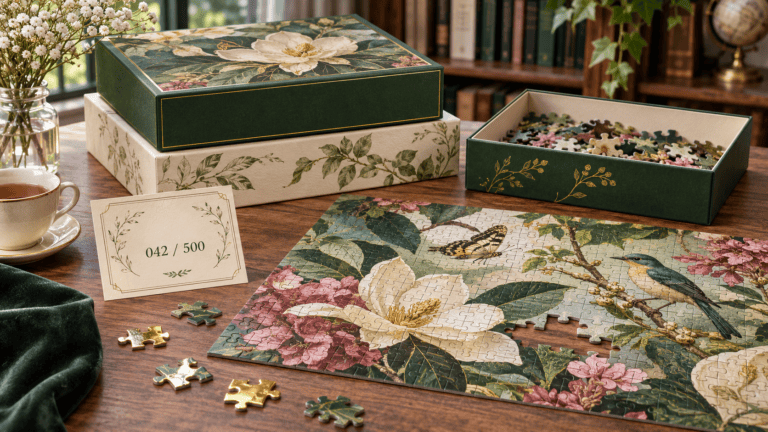
Today, being a dissectologist is no longer a marginal or elitist practice. The puzzles have gained a place in pop culture, with collaborations between contemporary artists and puzzle makers, and innovative formats such as 3D puzzles or immersive puzzles. Modern dissectologists are as attracted to these new developments as are modern classics. For them, every puzzle box is a promise: that of a journey, of exploration.
The dissectologist and his tools
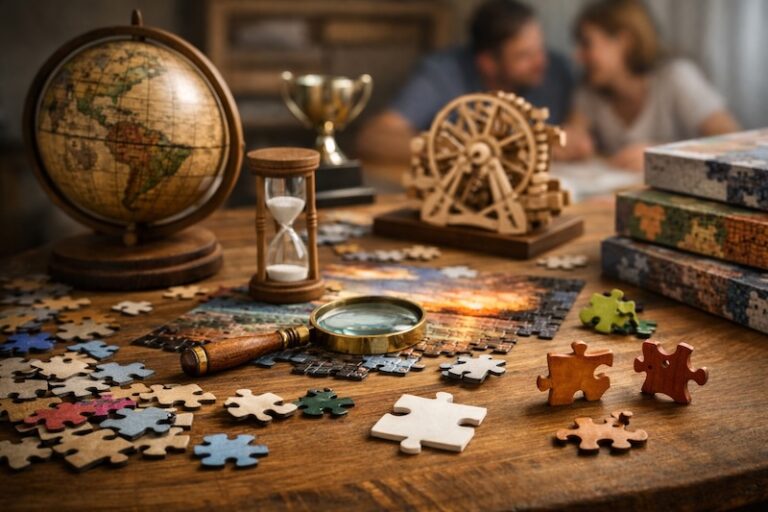
If you ask an experienced dissectologist what his or her essential needs are, you will receive a surprisingly accurate list. A puzzle mat allows you to move your work without disturbing anything. A tray makes it easy to sort pieces by color or shape. And for nighttime puzzle enthusiasts, a adjustable lamp is essential to spot the subtle nuances between two shades.
But beyond the accessories, what characterizes a dissectologist is his approach. Some always start with the borders, setting the framework before going into detail. Others prefer to focus on patterns or color areas immediately. There is no right or wrong method: every dissectologist has his own style, his own way of taking the challenge.
A Community in Growth
With the rise of social networks, the dissectologists’ community has expanded and become connected. Hashtags like #PuzzleAddict or #JigsawLove bring together thousands of publications, where each one shares their exploits and tricks. Speed puzzling competitions, where teams compete to solve puzzles in record time, are also gaining popularity.
For dissectologists, these meetings are not just an address contest. They are opportunities to exchange, discover new brands or techniques, and celebrate a common passion. It is a warm community, where each piece found by another is a shared victory.
The Commission
Being a dissectologist is embracing a way of life that values patience, reflection, and the pleasure of small victories. In each box, they see not only pieces to put together but a journey, a challenge, and sometimes even a form of active meditation. So, are you ready to join their ranks? Maybe you’re already in the dark.
Échanger autour de cet articleUne question ou une expérience à partager ?