Step 1 – Basics (1-2 months)
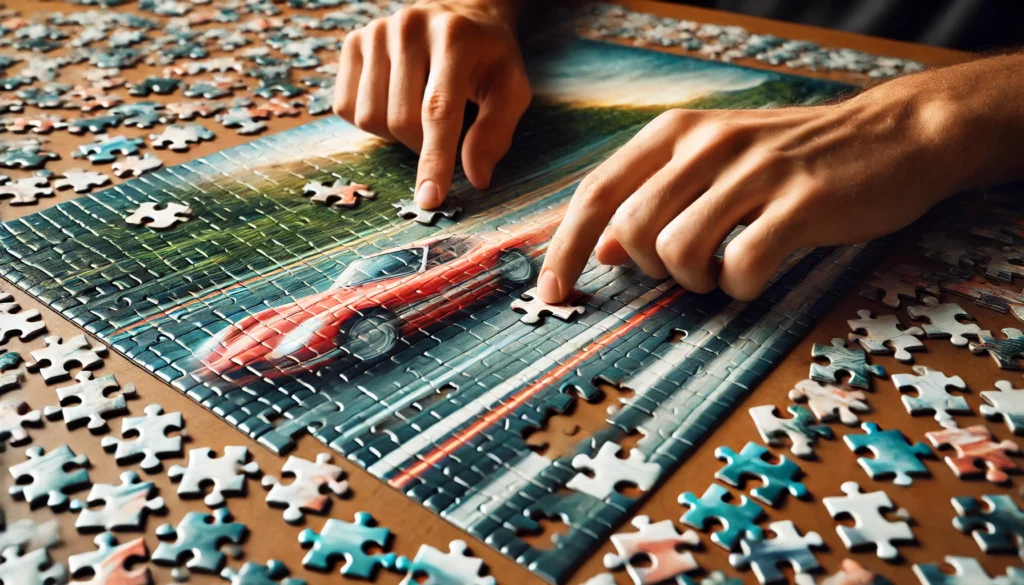
The first two months should be devoted to discovering speed puzzles and learning the basics. This is not the time to try to break records, but rather to acquire reflexes that will serve you in the long run. The aim is to familiarize you with puzzle assembly, part sorting, and time management.
Objectives of this phase :
- Solving Puzzles 300 to 500 pieces.
- Practice twice a week.
- One hour sessions.
- Exercise on the assembly of edges and the search for distinct colours or patterns.
Practice solving a 500-piece puzzle in a reasonable time. Start with simple images so you don’t get distracted by complex details. As you move on, you will develop effective habits that will save you time on the recognition of coins.
Step 2 – speed and initial strategies (3-6 months)
In the third month, start focusing on speed. At this point, you must train to assemble a 500 piece puzzle quickly while maintaining a good quality of work. Test different assembly strategies to determine which are the most effective for you.
Objectives of this phase :
- Solving Puzzles 300 to 500 pieces I’m going to watch it.
- Practice 2 to 3 times a week.
- One hour sessions.
- Testing multiple strategies: start with the edges, sort the parts by color, or solve specific sections first.
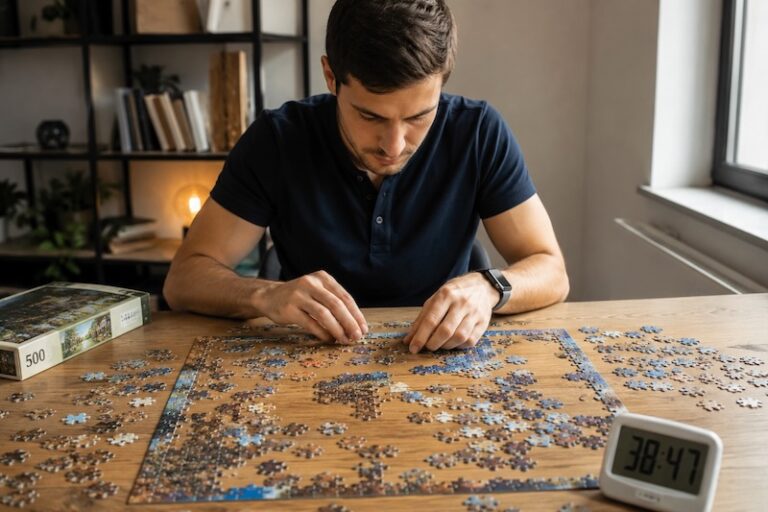
The important thing here is to time your sessions and try to gradually reduce your time without neglecting precision. For example, a good way to save time is to assemble areas of color or distinctive pattern before finalizing more complex parts.
Stage 3 – Endurance and performance under pressure (7-9 months)
As you progress, it becomes necessary to increase the intensity of your workouts to develop your endurance and ability to solve puzzles under pressure. This is to adopt long sessions, preferably by simulating competitions where you have to solve several puzzles in a limited time.
Objectives of this phase :
- How to solve this A puzzle of 500 pieces a week I’m going to be here all the time.
- Practice 2 to 3 times a week.
- Minimum one hour of sessions.
- Working on puzzles from 100 to 500 pieces, depending on the intensity of training.
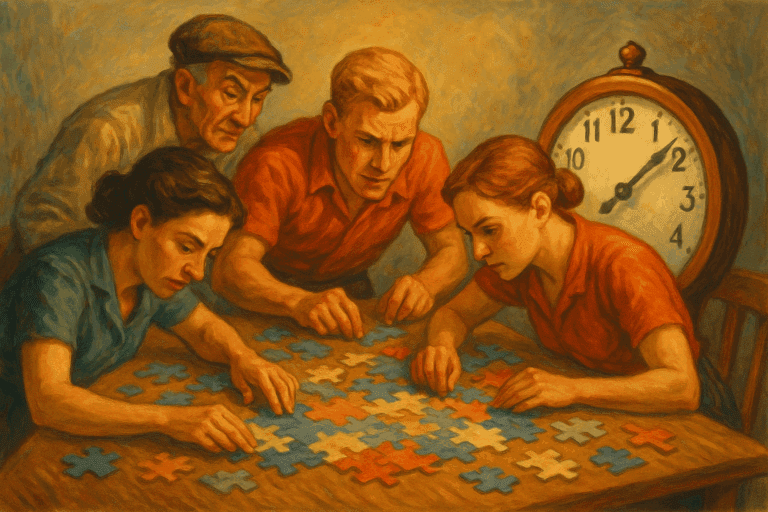
During this phase, you need to increase your mental stamina. Solving a puzzle in 1h30m is fine, but being able to solve two puzzles in a row without losing performance is essential for competitions. This also involves managing stress and maintaining optimal concentration throughout the exercise.
Stage 4 – development and simulation of competitions (10-12 months)
The last three months must be devoted to the ultimate improvement. You are now able to solve puzzles quickly, but the goal is to continue to refine your technique while increasing your ability to solve puzzles under pressure conditions.
Objectives of this phase :
- Solving Puzzles 500 pieces in less than 1h30min.
- Get some practice 3 times a week, including at least a 500-piece puzzle every week.
- Test sessions where you solve a puzzle in less than 2 hours, to simulate competitions.
Learn to make quick decisions without sacrificing the quality of work. At this point, you need to be able to maintain a high level of performance even after spending an hour or more assembling puzzles. This intensive program will help you develop not only technical skills but also great mental and physical endurance to cope with competition pressure.
The Commission
With this 4-step programme, you will not only learn to solve puzzles faster, but also develop the concentration and endurance needed for competitions. Regular training and continuous improvement in your techniques will help you to progress quickly and become a keen competitor in the world of speed puzzling.

Échanger autour de cet articleUne question ou une expérience à partager ?