Japanese elegance and precision
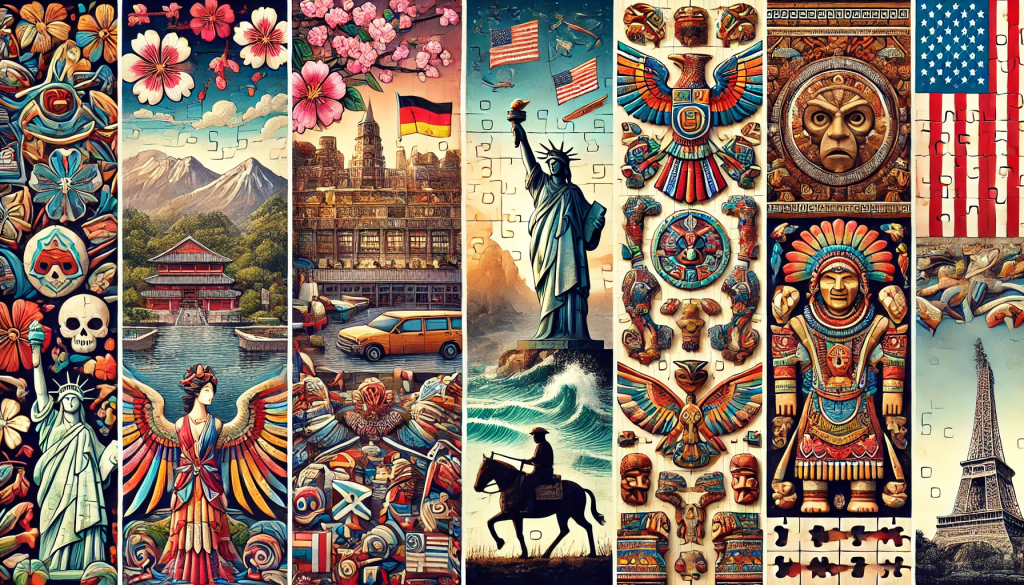
In Japan, puzzles are much more than a hobby. Manufacturers, such as Tenyo and Yanoman, incorporate a meticulous artistic approach. Japanese puzzles are often distinguished by their sophisticated designs and the use of cultural themes such as traditional landscapes, ukiyo-e prints, or floral motifs.
A local particularity is the tendency to produce puzzles with unusual shapes. For example, puzzles cut into irregular shapes, or even animal silhouettes, embody the art of surprise the user. It is a form of escape where assembly becomes an aesthetic quest as much as a logical challenge.
In some rural areas, puzzles are also used in schools to teach geographic or historical concepts, combining learning and play. A puzzle depicting Kyoto blossomed cherry trees becomes a way to introduce children to their national heritage.
The European intensity
In Europe, the puzzle is central, especially in Germany, a country known for its love of detail and quality. Brands like Ravensburger have become synonymous with excellence through their accuracy of assembly and their captivating designs. A distinctive feature of European puzzles is their size. Fans love to take on the ultimate challenge: 5,000, 10,000, even 40,000 pieces of puzzle are commonplace.
The European puzzle culture also highlights urban panoramas. The most iconic cities such as Paris, London and Venice are regularly represented. In Germany, the puzzle is even becoming a social object: local clubs hold competitions to assemble puzzles in record time, attracting players from all over the continent.
American ingenuity
In the United States, puzzles are approached from a more commercial and creative perspective. Companies like Springbok and Cobble Hill offer colorful, often humorous designs that appeal to a wide audience. Puzzles in America also have a seasonal dimension: special Christmas, Halloween or Thanksgiving collections are launched every year.
But America has also been a pioneer in the concept of educational puzzles. The United States’ maps, historical scenes and 3D puzzles, such as those representing famous monuments (the Statue of Liberty or the Golden Gate Bridge), are designed to learn in fun.
Another American specialty is the development of custom puzzles. It is common to create puzzles from personal photos, thus turning a family memory into a group activity.
Crafts in South America
In South America, puzzles are often influenced by local craft traditions. In Peru, for example, it is not uncommon to find hand-crafted puzzles, representing patterns inspired by Inca culture or the landscapes of the Andes. These puzzles, although less common in industry, are highly prized by amateurs in search of authenticity.
South American artisans often prefer wood for the manufacture of puzzles, which gives them a unique and lasting character. They are also sold in local markets, helping to promote the region’s cultural wealth.
The African origin
Africa, although less known for its puzzles, offers fascinating creations from local craftsmanship. In South Africa, for example, engraved wooden puzzles take on tribal patterns or savannah scenes. These puzzles, often hand-made, are as much decorative as games.
In some cultures, the puzzle is also used as an educational tool to introduce children to local languages or the history of their community. A puzzle depicting the Big Five (lion, elephant, rhinoceros, buffalo and leopard) can become a fun gateway to African wildlife.
A Fascinating Universality
Although each region of the world brings its own vision of the puzzle, one thing remains universal: the pleasure of seeing an image be seen piece by piece. Whether it is through Japanese detail, European challenges, American innovation or South American craftsmanship, puzzles transcend borders and cultures.
They embody a universal language, where play, art and reflection join together. Exploring puzzles around the world, we discover more than just a hobby. We enter into a mosaic of traditions and stories that reflect the diversity and richness of human cultures.
Échanger autour de cet articleUne question ou une expérience à partager ?