
When Crisis Rhymes with Creativity
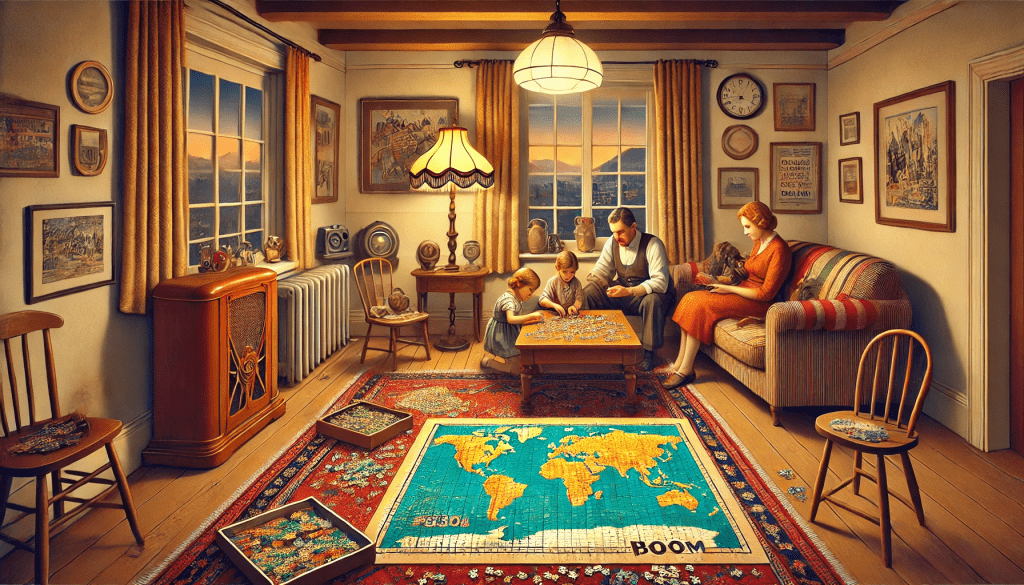
In the 1930’s, the world was in the midst of the Great Depression. Unemployment is at record highs, and household budgets are tight. In this austere climate, puzzles become a refuge. They provide affordable, sustainable entertainment and, above all, a way of escaping an often difficult reality. Where going to the movies is expensive and involves moving around, a puzzle can be done at home, alone or with family, repeatedly.
It is also at this time that puzzles evolve to meet this new demand. Until then, puzzles were mostly made of wood and therefore relatively expensive, but their production was transformed by the introduction of cardboard. This innovation, made possible by industrial progress, reduces costs drastically. For example, a handmade wood puzzle could cost the equivalent of a day’s wages, while a cardboard puzzle was sold for a fraction of that price.
Marketing innovation: weekly puzzles
Another key factor in the rise of puzzles in the 1930s was the bold marketing strategies adopted by gaming companies. The American brand Parker Brothers, for example, innovates by launching weekly puzzles. Every week, a new puzzle is published, creating a feverish expectation among amateurs. This model is reminiscent of the serial publication of the novels at the same time. It is a game of loyalty, turning a hobby into a ritual.
This periodicity also enables businesses to maintain the interest of consumers by constantly renewing their products. Like magazines, these weekly puzzles are becoming collectibles for some. The themes vary from idyllic landscapes to historical or cultural scenes, which reinforce the attractiveness of a wide audience.
A Teaching Tool and Social Mark
The 1930s puzzle is not just a game; it’s also becoming an educational tool. Many of them are designed with maps, reproductions of famous art works or educational scenes, allowing children and adults to learn while having fun. In a time of limited budget, this dual role ⁇ educational and playful ⁇ is particularly appealing to parents.
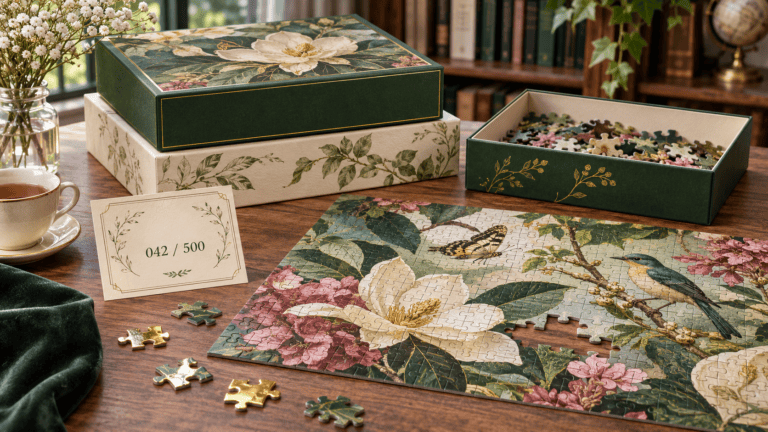
However, the puzzle also holds a place among the wealthy classes. Handmade wooden models, although few, continue to exist, offering a level of sophistication and difficulty sought by a more elite clientele. Some luxury puzzles are even customized, depicting family badges or custom scenes.
Thus, puzzles become a universal social marker: a game for the masses, but also a refined object for the rich.
The Worldwide
While the rise of puzzles primarily begins in the United States, the phenomenon quickly crosses borders. In Europe, where the effects of the Great Depression are also felt, cardboard puzzles are gaining traction. European publishers like Ravensburger in Germany are starting to produce puzzles in large quantities, cementing their reputation that continues to this day.
The success of puzzles during this period also depends on their ability to federate. They bring families together in a common activity and allow individuals to refocus themselves in a turbulent world. The notion of the end of the puzzle, where each piece finds its place, becomes almost a metaphor for the order and stability sought in these difficult times.
A Lasting Legacy
The impact of the 1930s on the history of the puzzle is still being measured today. The innovations of this period – cardboard production, weekly marketing, democratization – laid the foundations for the creation of a new and innovative model for the development of the puzzle. The modern puzzle industryMany historical manufacturers saw their initial successes emerge during this period.
In addition, the puzzle remained what it was in the 1930s: a leisure at once simple and deep. It attracts by its accessibility and loyalty by the satisfaction it provides when it is finished.
The Commission
The golden age of puzzles has not only allowed the game to thrive over the decades, but also adapted to new audiences, new technologies and new uses. If you are putting together a puzzle today, you should know that you are participating in a tradition that was almost a century old, born of a time when, facing adversity, the world has found refuge in these small pieces of cardboard.


Discuss this articleHave a question or an experience to share?